Showing posts with label alignment for better performance. Show all posts

Sunday, January 20, 2013

Weekly Tips & Blog moved to Website


We hope you will come join us on our new website and subscribe to the continuation of Mr QuickTrick's ™  Daily musings and alignment tips.
Our next blog will cover Aggressively lowered cars and how to make sure modifications do not impact your ties and wheels in a negative way!

We will keep you updated on our appearance on Truck U as well as our thank you drawings and give-aways!

Join us at:  http://www.quicktrickalignment.com/

See you there!

Mr. QuickTrick™


Sunday, January 13, 2013

Setting Air Pressure – Did you know that time of day is Important?


We have put together information to give you some top tips to Increase performance and extend the life of your tire.  All of these tips apply to knowledge you should have when you are ready to measure and adjust your alignment.


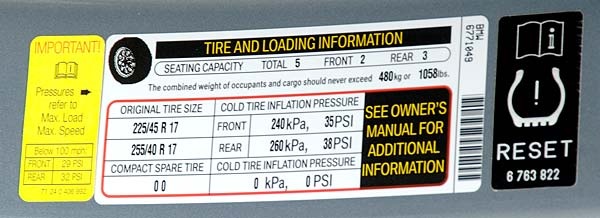
  • Measure and Adjust pressure In The Morning. Set according to OEM’s cold tire pressure(s) listed on the vehicle's tire label. This must be done early, before the sun’s warmth can take affect.

Inconsistencies:
  • Tire Heat Generated While Being Driven (or at speeds of less than 45 mph).* - Set 4 psi above vehicle manufacturer's cold inflation recommendations.
  • Heat Generated While Being Driven Extensively (or at sustained speeds greater than 45 mph).* Set 6 psi above vehicle manufacturer's cold inflation recommendations.

Do Not Release Hot Tire Pressure if any of the variables above could be the cause of tire pressure exceeding the maximum psi branded on the tire's sidewall by the 2, 4 or 6 psi indicated above for the various conditions. This temporary pressure increase is expected and designed into the tire's capabilities.
  • Indoor-to-outdoor Temperature Variation. Significant differences between the conditions tire pressures are set (the warmth of an attached garage, heated garage or service shop) and in which the vehicle will be driven (winter's subfreezing temperatures) requires inflating tires 1 psi higher than recommended on the placard for every 10° F difference in temperature between interior and exterior temperatures.
  • Afternoon Ambient Temperature Increase.* Set 2 psi above vehicle manufacturer's cold inflation recommendations when installing new tires or if the vehicle has been parked in the shade for a few hours.

*NOTE: Tires on a parked vehicle exposed to direct sunlight will appear overinflated due to the heat absorbed from the radiant energy of the sun. Pressures cannot be accurately set on these tires until all have stabilized in the shade.
Your alignment setting and measurements are an important part of increasing your car’s life and improving driving performance.  We encourage everyone to use their QuickTrick™ Alignment Products to stay consistent, but no alignment can be all it should be without the correct tire pressure!  Any NASCAR or Weekend Racer can testify to the importance of both!

Pssst.. Don’t forget Valentine’s Day is coming and if you want to watch Daytona in peace, you better make it good!

Have a great week!

Mr. QuickTrick™

Sunday, December 23, 2012

How Temperature Affects Tire Pressure..


Keeping your tires in proper condition helps save money and, of course, avoid accidents. Understanding how temperature affects tires and their pressure is imperative for car maintenance.
Tire pressure is the amount of air in your tires. This is measured in pounds per square inch, or psi. The recommended pressure level is usually listed in the owner's manual.

Changes in the air temperature affect your tire pressure. For every 10-degree fluctuation in temperature, your tires gain or lose one pound of pressure. This makes it important to consistently check your levels because changes in the season will affect your pressure. A tire that is inflated just right at the start of August may become underinflated as the winter months begin.

The heat from friction created by the contact between your tires and the road will increase tire pressure. As the temperature of your tires rise, so will the pressure levels. This increase can cause overinflated tires to blow or underinflated tires to appear acceptable. Check your tire pressure often and stay with all regularly scheduled maintenance with your QuickTrick™ Alignment Product.   Stay safe, have better performance & save some money!!

MERRY CHRISTMAS!!!                                See you next week!!!  

Sunday, December 16, 2012

The Importance of Tire Pressure & Alignment


So, today we explore the importance of Tire Pressure as relates to your wheel alignment.  Many people have no idea that a temperature drop in winter or rise in summer can greatly affect your tire pressure, but all of us know that if there is an issue with your tire, it will affect your wheels and therefore alignment!

In 2003, all vehicle manufacturers were directed to place tire information labels in a standard location and follow the same format. Tire information labels identify the Original Equipment tire sizes and inflation pressures (including the spare), along with the vehicle weight capacity.  

In addition, the new vehicle owner manual must also reflect the five subject areas:
·      Tire labeling
·      Recommended tire inflation pressure
·      Glossary of tire terms
·      Tire care
·      Vehicle load limits

Vehicle manufacturers can also list alternate tire pressures based on load and/or speed in the owner's manuals.

Vehicles produced between 1968 and 2003 have the original tires size(s) and inflation pressures (including the spare) listed on a vehicle placard (sometimes alternate pressures based on load and/or speed conditions are provided).
The 1968 – 2003 labels are found in one of the following locations:
·      The driver-side door or doorjamb
·      Rear passenger doorjamb of Ford sedans
·      Fuel filler door
·      Glove box or center console door
·      The engine compartment

As far as temperature affects, a good rule is that pressure varies 1 PSI for a temperature change of 10 degrees Fahrenheit.  So for example, if you measure your tire pressure at 90 degrees Fahrenheit, the "standard" pressure at 68 degrees would be about 2 PSI less than what you measure. If you want, say, 44 PSI at 68 degrees, but it's 90 degrees outside, then put some extra air in your tires, wait for it to adjust to the outside temperature, and bleed or top off the tire until the gauge reads about 46 PSI.
Just remember to maintain your pressure and perform your scheduled QuickTrick™ routine measurements and your car performance will be better, your tires will last longer and you will be the master of your own “wheel” domain!!
Have a great week!
Mr QuickTrick


Sunday, September 9, 2012

Our weekly segment series continues with Race Car Alignments Tools: Race cars require specific alignments in order to give the driver maximum control of the car without compromising his safety. Although those measurements differ from car to car, there are tools that can help the driver and crew make sure their vehicle meets the proper criteria for safe and efficient alignment. Laser tools and electronic gauges help to determine the exact angles and measurements that the wheels must be set at in order for the car to be easily turned and operated during a race. The alignment always should be checked before a race using the proper types of tools such as the QuickTrick™ Alignment Systems found on our website at www.quicktrickalignment.com with full instructions. Tune in Next week for additional information & tips!